
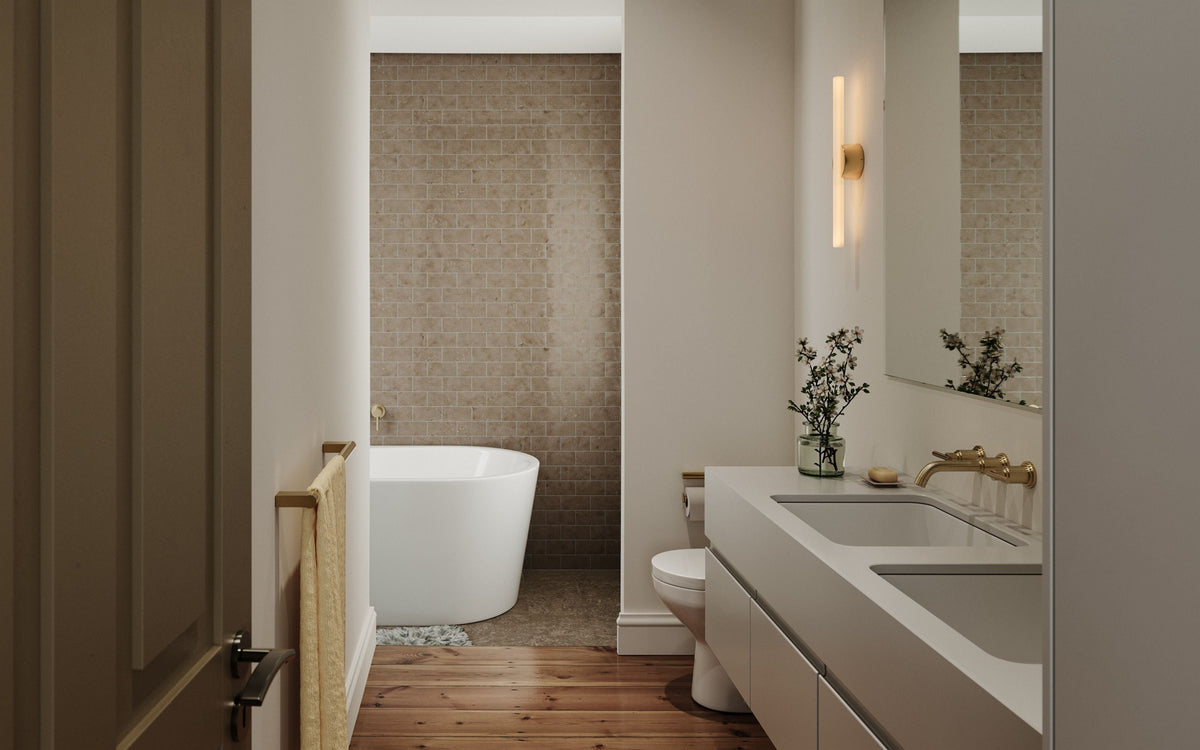
Choosing the right bathroom lighting is about more than simply brightening the room. The best bathroom lighting combines practical illumination with carefully considered design, helping you create a space that feels comfortable, functional and inviting.
Whether you are updating a compact en-suite or designing a spacious family bathroom, combining ceiling lights, wall lights and task lighting can make all the difference. In this guide, we explain how to choose bathroom lighting, what to consider when selecting fittings and how to create the right atmosphere for your space.

1. Plan Your Bathroom Lighting in Layers
A well-lit bathroom usually combines three types of lighting: ambient, task and accent lighting. Using these together helps balance everyday practicality with a relaxing atmosphere.
Ambient lighting provides the main illumination for the room. A ceiling light is often the starting point, providing an even spread of light throughout the space.
Task lighting helps with activities that require clear visibility, such as shaving, skincare and applying makeup. Lighting around the bathroom mirror is particularly important, as a single overhead light can cast shadows across the face.
Accent lighting adds depth and character. Decorative wall lights or a statement ceiling fitting can highlight your bathroom's design and create a more considered finish.
Planning these layers together helps you create a bathroom that works for everyday routines while still feeling inviting in the evening.
2. Choose the Right Type of Bathroom Light
Bathroom Ceiling Lights
Bathroom ceiling lights provide the main source of illumination in most bathrooms. Flush fittings are particularly useful in smaller rooms or bathrooms with lower ceilings, as they provide practical lighting without taking up much visual space.
If you are looking for an affordable option, the Endon Talo Bathroom Ceiling Light is worth considering. For a softer, more decorative finish, the MADE.COM Wood Effect Nura Flush Bathroom Ceiling Light introduces a wood-effect detail that can complement natural materials and warm neutral interiors.

When choosing a ceiling light, consider the size of your bathroom, the height of the ceiling and the amount of illumination needed. Always check that the fitting is suitable for its intended bathroom location.
Bathroom Wall Lights
Bathroom wall lights provide useful supplementary illumination while introducing decorative detail. Positioned thoughtfully, they can help balance the light in the room and complement your taps, handles and other bathroom accessories.
The Franklite Allure Aged Brass Bathroom LED Wall Light is a lovely option for introducing a warm metallic finish, particularly in bathrooms with brass fixtures and fittings.
Before choosing wall lights, consider where they will be positioned and how their light will fall. For mirror lighting, fittings placed either side of the mirror can help reduce unwanted shadows.
Task Lighting: Bathroom Mirrors and Vanity Lighting
Good task lighting is essential around the bathroom mirror. Even illumination makes everyday routines easier, from applying makeup to shaving and carrying out skincare.
An illuminated magnifying mirror can be particularly useful when you need a closer view. The Astro Mascali Round LED Matt Black Bathroom Magnifying Mirror combines integrated LED lighting with a magnifying mirror, making it a practical addition to a contemporary bathroom.

For the best results, combine dedicated mirror lighting with the room's general illumination rather than relying on a single ceiling light. This helps create a more balanced lighting scheme and can reduce harsh shadows across the face.
Decorative Bathroom Lighting
Bathroom lighting can be both functional and decorative. If your space allows, a statement fitting can introduce character and help bring your interior scheme together.
The Astro Tacoma Mix & Match Bathroom Range offers flexibility through a choice of finishes, including antique brass, polished chrome and matt black. The fittings can be paired with a selection of glass shades, sold separately, including clear, ribbed, opal and smoked designs. With an IP44 rating, the range is suitable for bathroom zones 2 and 3, subject to the specific fitting's installation requirements.
For a statement look, the Quintiesse Pim 5-Light Bathroom Chandelier in Fox Gold brings a touch of mid-century modern style to the bathroom. Its rounded, satin-etched cased opal glass shades create a soft, diffused glow, while the Fox Gold finish adds warmth and makes the fitting a decorative focal point. The Pim collection is also available in polished chrome, and all fittings are IP44 rated. Check the manufacturer's guidance to confirm the suitability of the specific fitting for your intended position.

3. Choose the Right Colour Temperature
The colour temperature of a light affects how your bathroom looks and feels. It is measured in kelvins (K), with lower values producing warmer light and higher values producing cooler light.
-Warm white (around 2700K–3000K): Creates a soft, relaxing atmosphere, making it a good choice for bathrooms designed for unwinding.
-Neutral white (around 3000K–4000K): Offers a balanced, natural-looking light that can work well for everyday bathroom tasks.
-Cooler white (around 4000K and above): Produces a crisper appearance, although it may feel less relaxing in a bathroom intended as a calming retreat.
For a versatile scheme, consider how your bathroom will be used throughout the day. Softer lighting can be pleasant in the evening, while clear, even illumination is helpful for grooming and applying makeup. Where possible, consider compatible dimming or adjustable colour-temperature features.
4. How to Light a Small Bathroom
In a small bathroom, the right lighting can help the room feel brighter and more open without overwhelming the space.
Start with a ceiling light that provides good general illumination. Flush fittings are particularly useful where ceiling height is limited. The Dar Essien Flush White LED IP44 offers a simple, understated design that works well in a contemporary bathroom.
Next, consider adding mirror lighting to improve visibility around the basin. This creates a more balanced result than relying on one central ceiling light alone. Reflective surfaces, pale finishes and a consistent colour temperature can also help the room feel brighter.
Finally, avoid using too many competing styles of fitting in a compact space. Coordinating finishes, such as brass or chrome, helps create a cohesive look while still allowing you to layer the lighting.

5. Understand Bathroom Lighting Safety and IP Ratings
Bathrooms contain moisture and water, so it is essential to choose fittings suitable for their intended location. An IP rating indicates how well a fitting is protected against the ingress of solids and moisture.
The correct rating depends on where the light will be installed and its exposure to water. Bathroom lighting is commonly discussed in terms of zones:
-Zone 0: The inside of a bath or shower basin. Lighting here requires equipment specifically suitable for immersion and the applicable extra-low-voltage requirements.
-Zone 1: The area directly above the bath or shower, within the dimensions defined by the relevant wiring regulations.
-Zone 2: The area immediately surrounding Zone 1, generally extending 0.6 metres beyond it under standard definitions.
-Outside the zones: Other areas of the bathroom, where the required protection depends on the location and likely exposure to moisture.
IP44-rated fittings are commonly used in appropriate bathroom locations, including many Zone 2 applications. For example, the Quintiesse Ashlandbay Bathroom Wall Light in Natural Brass is an IP44-rated option. However, an IP rating alone does not mean a light can be installed anywhere in a bathroom. Zone 0 has more demanding requirements, and other positions may require a higher level of protection depending on the circumstances.
Always check the manufacturer's instructions and the fitting's specific suitability before purchasing. A qualified electrician can confirm the correct rating, positioning and installation requirements for your bathroom.

Frequently Asked Questions About Bathroom Lighting
1. What makes a bathroom light waterproof?
Bathroom lights are designed with protection against moisture and water, indicated by their IP (Ingress Protection) rating. The rating consists of two digits, which indicate protection against solid objects and moisture. For example, an IP44-rated fitting is protected against splashing water from different directions. However, no bathroom light should be assumed to be suitable for every location. Always check the product specifications and manufacturer's installation guidance before choosing a fitting.
2. What are the best affordable modern bathroom ceiling lights?
Modern bathroom ceiling lights combine practical illumination with a design that complements your interior. Flush fittings are particularly useful in bathrooms with lower ceilings, while opal glass diffusers can provide a softer, more even spread of light.
The Astro Denver Polished Chrome Bathroom Ceiling Light is a compact option featuring a polished chrome finish and an opal glass globe. Its understated design suits contemporary bathrooms, and its IP44 rating makes it suitable for bathroom zones 2 and 3, subject to the manufacturer's installation guidance. When comparing affordable options, consider the fitting's price, bulb requirements, durability and suitability for your bathroom.

3. What IP rating do I need for bathroom lighting?
The IP rating you need depends on where the light will be installed and how exposed it is to water. IP44-rated fittings are commonly used in suitable bathroom locations, including zones 2 and 3. Areas inside a bath or shower have stricter requirements and need specially rated equipment.
Before purchasing, check the product's IP rating and the manufacturer's guidance for the intended installation position. A qualified electrician can confirm which fittings are suitable for your bathroom and ensure the installation meets current wiring regulations.
4. What are the best LED bathroom lights for small spaces?
LED bathroom lights are a practical choice for small spaces because they can provide effective illumination while keeping fittings compact. Flush ceiling lights work well where headroom is limited, while LED wall lights and illuminated mirrors can provide additional light without taking up floor or surface space.
Look for fittings that provide enough light for the room without creating harsh glare. Choosing a consistent colour temperature and combining general lighting with task lighting can also make a small bathroom feel more balanced and comfortable.

5. How can I light a small bathroom effectively?
To light a small bathroom effectively, start with a ceiling light that provides even general illumination across the room. Add task lighting around the mirror to improve visibility for shaving, skincare and applying makeup. If possible, position wall lights either side of the mirror to reduce shadows across the face.
You can also help the space feel brighter by using reflective surfaces, pale finishes and coordinated fittings. Avoid relying on one overhead light alone, as this can leave darker areas around the basin and corners of the room.
6. What are bathroom lighting zones and why do they matter?
Bathroom lighting zones define areas around baths and showers according to their exposure to water. They help determine the type of fitting, IP rating and electrical protection required.
-Zone 0: Inside the bath or shower basin, where equipment must be specifically suitable for immersion and meet applicable extra-low-voltage requirements.
-Zone 1: The area directly above the bath or shower, within the dimensions defined by the relevant wiring regulations.
-Zone 2: The area immediately surrounding Zone 1, generally extending 0.6 metres beyond it under standard definitions.
-Outside the zones: Other bathroom areas, where the required protection depends on the location and likely exposure to moisture.
The correct fitting depends on the precise installation position, so always check the manufacturer's specifications and seek advice from a qualified electrician if you are unsure.

7. What type of bathroom lighting is best for applying makeup?
The best bathroom lighting for applying makeup illuminates the face evenly and shows colours as accurately as possible. Lighting positioned either side of the mirror can help reduce shadows, while an illuminated magnifying mirror is useful for detailed tasks such as eyeliner or skincare.
A neutral-white light can provide a natural-looking result, particularly when it has a good colour rendering index (CRI). Avoid relying solely on a ceiling light directly above the mirror, as it can create shadows beneath the eyes and chin.
Find the Right Bathroom Lighting for Your Home
The best bathroom lighting combines safe, suitable fittings with a thoughtful mix of general, task and decorative illumination. By considering your room size, daily routines, preferred finishes and the correct IP ratings, you can create a bathroom that works beautifully throughout the day.
Explore the Amos Lighting + Home bathroom lighting collection to discover ceiling lights, wall lights, mirror lighting and decorative designs for your space.


